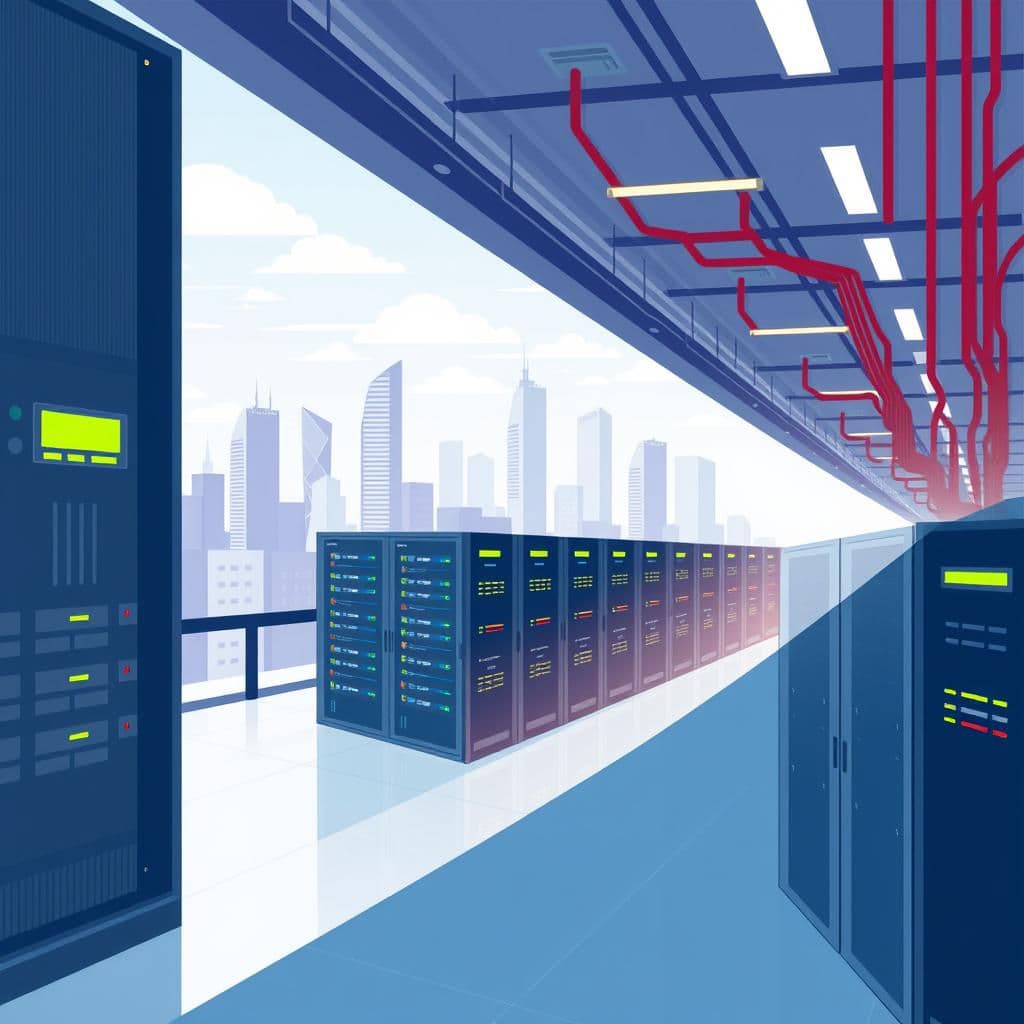
The rapid advancement of Artificial Intelligence (AI) has been a significant focus of attention in recent years. As AI technology evolves, its applications are becoming increasingly widespread, from virtual assistants to complex data analysis. However, the buildout of AI is being slowed down by a critical limitation: the electrical grid, which is struggling to meet the massive power demands of AI data centers. This limitation is not only a concern for the development of AI technology but also for the environment, as the production of electricity to power these data centers contributes to greenhouse gas emissions, a major contributor to climate change.
What are the power requirements of AI data centers?
AI data centers, which house thousands of servers, require significant amounts of power to operate, driving up overall power consumption. The power consumption of AI data centers is expected to continue growing as AI technology advances and more data centers are built to support the increasing demand for AI services. For instance, a single AI data center can consume as much power as a small town, with some estimates suggesting that the total power consumption of AI data centers could reach 8% of global electricity demand by 2030. This significant power demand is primarily driven by the need to power and cool the thousands of servers that make up these data centers.
The power requirements of AI data centers are a concern not only for operators but also for the electrical grid as a whole. According to Works in Progress, the electrical grid is struggling to keep up with the demand for power from AI data centers. This struggle is evident in the frequent power outages and disruptions experienced by data centers, which can have significant economic and environmental implications. Furthermore, the grid's inability to meet the power demands of AI data centers can lead to a slowdown in the development and deployment of AI technology, ultimately hindering its potential benefits.
How is the electrical grid impacted by AI data centers?
The electrical grid is impacted in several ways. The massive power demands of AI data centers put a strain on the grid's infrastructure, leading to power outages and disruptions. The grid also faces challenges in meeting the increasing power demands, requiring significant upgrades to its infrastructure. These upgrades can be costly and time-consuming, making it essential to explore alternative solutions to reduce power consumption and increase energy efficiency. Moreover, the grid's infrastructure is often aging and inadequate, making it difficult to support the high power demands of AI data centers.
The impact on the electrical grid is not only a concern for operators but also for the environment. The production of electricity to power AI data centers contributes to greenhouse gas emissions, a major contributor to climate change. As AI technology evolves, it is essential to consider the environmental impact and explore ways to reduce power consumption. For more information, see the Wikipedia article on the topic. The use of renewable energy sources, such as solar and wind power, can help reduce the environmental impact of AI data centers. Additionally, increasing energy efficiency through the use of efficient servers, cooling systems, and energy-saving technologies can also help minimize the environmental footprint of AI data centers.
What are the consequences of the electrical grid's limitations on AI buildout?
The consequences of the electrical grid's limitations are significant. The slowdown of AI buildout can have far-reaching implications for AI technology development. Addressing the grid's limitations is essential to support AI technology evolution. The limitations can hinder the development of new AI applications, such as natural language processing and computer vision, which require significant computational power and energy. Moreover, the slowdown of AI buildout can also impact the economy, as the development and deployment of AI technology can create new job opportunities and stimulate economic growth.
The consequences are not only a concern for AI development but also for the economy. The buildup of AI data centers creates new job opportunities and stimulates economic growth. However, the slowdown of AI buildout can have a negative economic impact. For more information, see the Brookings Institution report. The report highlights the potential economic benefits of AI development, including increased productivity and job creation. Nevertheless, the report also emphasizes the need to address the challenges associated with AI development, including the environmental impact and the need for significant investments in infrastructure.
How can the limitations of the electrical grid be addressed?
The limitations can be addressed by upgrading the grid's infrastructure to increase its capacity and using alternative energy sources, such as solar and wind power, to reduce reliance on fossil fuels. Increasing the energy efficiency of AI data centers through efficient servers, cooling systems, and energy-saving technologies, such as energy-efficient lighting and power management systems, can also help. Furthermore, the use of advanced materials and technologies, such as graphene and supercapacitors, can help increase the efficiency of energy storage and transmission. Additionally, the development of new AI applications that are more energy-efficient, such as edge AI and federated learning, can also help reduce the power demands of AI data centers.
What this means for you
The slowdown of AI buildout due to the electrical grid's limitations has significant implications for AI technology development and its applications. Addressing the grid's limitations is essential to support AI evolution and minimize its environmental impact. By doing so, it is possible to ensure that AI's benefits are realized while reducing its environmental footprint. As AI technology continues to evolve, it is crucial to consider the environmental and economic implications of its development and deployment. This includes investing in renewable energy sources, increasing energy efficiency, and developing new AI applications that are more sustainable and environmentally friendly. Ultimately, addressing the limitations of the electrical grid is essential to unlock the full potential of AI technology and ensure a sustainable and environmentally friendly future. The future of AI development depends on our ability to address these challenges and create a more sustainable and efficient electrical grid that can support the growing power demands of AI data centers.