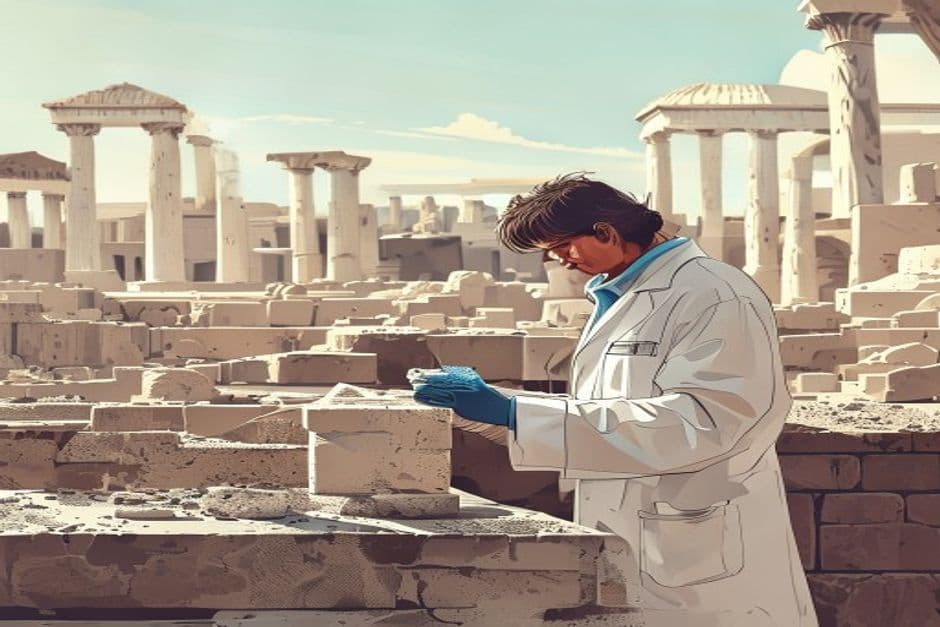
Roman concrete, also known as Opus caementicium, has fascinated people for centuries. This ancient building material has proven more durable and resistant to damage than modern concrete in some cases. The Roman Empire's structures, such as the Pantheon and the Colosseum, have stood the test of time, withstanding natural disasters, wars, and the elements. Researchers are now studying a 1,900-year-old Roman latrine to uncover the secrets behind Roman concrete's remarkable durability. The latrine, which is still intact, is a testament to the ingenuity and skill of the ancient Romans, who were able to create a material that has lasted for millennia. By studying this ancient material, researchers hope to gain a deeper understanding of its composition and properties, and to develop new, more sustainable building materials. For instance, the study of Roman concrete could lead to the development of more durable and sustainable roads, bridges, and buildings, which would have a significant impact on the infrastructure and economy of many countries.
What is Roman Concrete Made Of?
Roman concrete is a mixture of lime, water, and volcanic ash. The volcanic ash, which is rich in silicates, reacts with seawater to form a rare mineral that strengthens the concrete over time. This unique combination has allowed Roman concrete to last for millennia, with some structures still standing today. According to the Smithsonian, studying Roman concrete could lead to more sustainable and durable building materials. The use of volcanic ash, in particular, is of great interest to researchers, as it is a naturally occurring material that is abundant in many parts of the world. By harnessing the properties of volcanic ash, researchers may be able to create new building materials that are not only more durable but also more environmentally friendly. Additionally, the use of lime in Roman concrete is also noteworthy, as it helps to reduce the material's carbon footprint. The production of lime requires less energy than the production of cement, which is a key component of modern concrete. This makes Roman concrete a more sustainable option for building construction, and its study could lead to the development of more environmentally friendly building materials.
How Does Roman Concrete Compare to Modern Concrete?
Roman concrete is more durable and resistant to damage than modern concrete in some cases, due to the unique properties of the volcanic ash, which allows the concrete to self-heal over time. Modern concrete, made with cement, water, and aggregate, is more prone to cracking and damage. This is because modern concrete is often made with a higher water-to-cement ratio, which can lead to a weaker and more brittle material. In contrast, Roman concrete has a much lower water-to-cement ratio, which makes it more resistant to damage and deterioration. Researchers at the University of California, Berkeley, are studying Opus caementicium to develop more sustainable building materials. By understanding the properties and composition of Roman concrete, researchers may be able to create new building materials that combine the best of both worlds: the durability of Roman concrete and the ease of use of modern concrete. For example, the development of self-healing concrete could reduce the need for costly repairs and maintenance, making it a more attractive option for builders and architects. Furthermore, the use of more sustainable building materials could also lead to the creation of more energy-efficient buildings, which would have a significant impact on the environment and the economy.
What Are the Secrets Behind Roman Concrete's Durability?
The secrets behind Roman concrete's durability are still being uncovered, but the reaction between volcanic ash and seawater is believed to play a key role. This reaction forms a rare mineral that strengthens the concrete over time, allowing it to withstand the elements and last for centuries. The exact mechanism of this reaction is still not fully understood, but researchers believe that it involves the formation of a type of calcium-aluminum silicate hydrate, which is a rare and highly stable mineral. Studying ancient Roman concrete could lead to more sustainable and durable building materials, significantly impacting the construction industry. The use of Roman concrete principles could also lead to the development of new materials and technologies, such as self-healing concrete and sustainable cement alternatives. Additionally, the study of Roman concrete could also provide insights into the properties of other ancient building materials, such as stone and brick, which could lead to the development of more sustainable and durable building materials. The use of these materials could also lead to the creation of more historic and culturally sensitive buildings, which would be more in line with the aesthetic and architectural styles of the past.
How Can We Apply the Knowledge of Roman Concrete to Modern Building?
Researchers are working to develop more sustainable and durable building materials, using Roman concrete principles as a guide. The use of volcanic ash in modern concrete could create more durable and sustainable buildings, significantly impacting the environment. According to the National Institute of Standards and Technology, developing more sustainable building materials could lead to significant reductions in greenhouse gas emissions. The construction industry is one of the largest consumers of energy and resources, and the development of more sustainable building materials could have a major impact on the environment. By using volcanic ash and other natural materials, researchers may be able to create building materials that are not only more durable but also more environmentally friendly. For instance, the use of volcanic ash could reduce the need for cement, which is a major contributor to greenhouse gas emissions. Additionally, the use of more sustainable building materials could also lead to the creation of more energy-efficient buildings, which would have a significant impact on the environment and the economy. The development of more sustainable building materials could also lead to the creation of new industries and job opportunities, driving economic growth and innovation.
What this means for you
Studying Roman concrete has significant implications for the construction industry and the environment. As researchers uncover the secrets behind Roman concrete's durability, we can expect to see more sustainable and durable building materials. This could lead to buildings that are more environmentally friendly, resilient, and long-lasting, significantly impacting our daily lives and the world around us. The use of more sustainable building materials could also lead to cost savings and improved public health, as buildings would be less prone to damage and deterioration. Furthermore, the development of new materials and technologies could lead to the creation of new industries and job opportunities, driving economic growth and innovation. By learning from the ancient Romans and their innovative use of materials, we can create a more sustainable and resilient built environment for future generations. The study of Roman concrete could also lead to a greater appreciation and understanding of the engineering and architectural achievements of the ancient Romans, which could have a significant impact on the fields of history, architecture, and engineering. Additionally, the development of more sustainable building materials could also lead to the preservation of historic buildings and monuments, which would be a significant cultural and historical achievement.