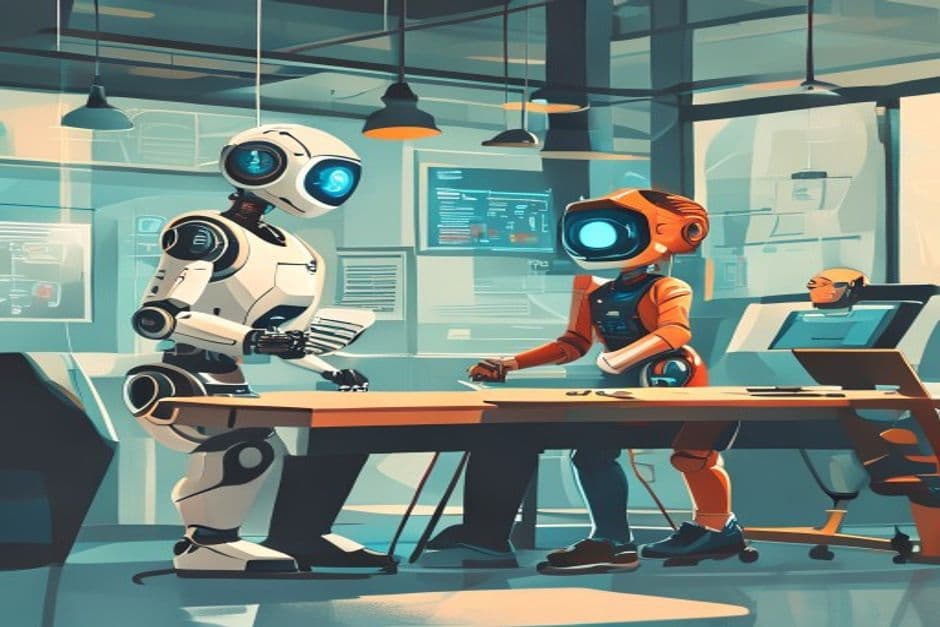
The future of work is a pressing concern as automation and artificial intelligence advance. A recent article on Normaltech.ai explores the question of what jobs will be left for humans. The article highlights the need for workers to acquire new skills to remain employable in an automated economy. For instance, jobs that require human skills like creativity, empathy, and problem-solving are less likely to be automated, and workers should focus on developing these skills to remain relevant.
The World Economic Forum estimates that by 2025, a significant number of jobs may be displaced by automation. Comments on Y Combinator highlight the importance of addressing this concern. The comments section is filled with discussions about the potential impact of automation on various industries, with some commenters suggesting that jobs in the tech industry may be more susceptible to automation. However, others argue that while automation may displace some jobs, it will also create new ones, such as AI ethicists and experts who can ensure that AI systems are developed and used responsibly.
1. Understanding Automation's Impact
Artificial intelligence is replacing jobs in various industries, and experts predict this trend will continue. As AI advances, routine and repetitive tasks will be automated, freeing humans to focus on complex and creative work. However, some jobs will become obsolete, and workers will need to acquire new skills to remain employable. For example, in the manufacturing industry, robots and machine learning algorithms are being used to automate tasks such as assembly and quality control. This has led to increased efficiency and productivity, but it has also displaced some workers who previously performed these tasks.
The impact of automation will vary across sectors, with some industries being more susceptible to automation than others. Jobs involving data entry, bookkeeping, and customer service may be more likely to be automated, while jobs requiring human interaction, empathy, and creativity may be less likely to be replaced. According to a report by the McKinsey Global Institute, up to 800 million jobs could be lost worldwide due to automation by 2030. However, the same report also suggests that up to 140 million new jobs could be created in the same time period, highlighting the need for workers to be adaptable and willing to acquire new skills.
2. Identifying Tasks that Require Human Skills
Tasks requiring human skills like creativity, empathy, and problem-solving are less likely to be automated. These tasks include jobs in the arts, social work, counseling, and education, where human interaction and emotional intelligence are essential. Jobs requiring critical thinking, analysis, and decision-making, such as STEM fields, may also be less susceptible to automation. For instance, while AI can analyze data and provide insights, human judgment and critical thinking are still required to interpret the results and make decisions.
According to the World Economic Forum, by 2025, many jobs may be displaced by automation, but new jobs will also be created. This highlights the need for workers to be adaptable and willing to acquire new skills to remain relevant. The World Economic Forum also suggests that workers should focus on developing skills that are complementary to automation, such as creativity, critical thinking, and problem-solving, as well as skills requiring human interaction, like communication, empathy, and teamwork.
3. Preparing for the Future of Work
To prepare, it is essential to develop skills complementary to automation, such as creativity, critical thinking, and problem-solving, as well as skills requiring human interaction, like communication, empathy, and teamwork. Workers should be willing to continuously learn and acquire new skills to remain relevant. Education and training programs can play a critical role in preparing workers for the future of work. These programs should focus on developing in-demand skills and providing workers with the tools and resources they need to succeed in an automated economy.
For example, online courses and training programs can help workers develop skills in areas such as data science, machine learning, and programming. Governments and organizations can also support workers displaced by automation with training, education, and financial assistance. This can include initiatives such as retraining programs, vocational training, and education subsidies. By providing workers with the support and resources they need, governments and organizations can help mitigate the negative impacts of automation and ensure that workers are prepared for the future of work.
4. Artificial Intelligence's Role in the Future of Work
Artificial intelligence will significantly impact the future of work. AI can augment human capabilities, freeing workers to focus on complex and creative tasks. However, concerns like job displacement and bias in decision-making algorithms must be addressed. Researchers are working to create transparent, explainable, and fair AI systems. This includes developing AI systems that provide insights into their decision-making processes and ensuring that AI systems are free from bias and discrimination.
There is a growing need for AI ethicists and experts to ensure that AI systems are developed and used responsibly. For instance, AI ethicists can work with developers to ensure that AI systems are designed with fairness and transparency in mind, and that they are tested for bias before they are deployed. This can help mitigate the risks associated with AI and ensure that AI is used to benefit society as a whole.

5. Creating a Future of Human-Machine Collaboration
Ultimately, the future of work depends on creating a collaborative relationship between humans and machines. This requires a fundamental shift in how we think about work and automation. By understanding the benefits and limitations of automation, we can create a future where humans and machines work together to improve our standard of living. Experts say the key to successful human-machine collaboration is developing skills complementary to automation, such as creativity, critical thinking, and problem-solving, as well as skills requiring human interaction, like communication, empathy, and teamwork.
By developing these skills, workers can remain relevant and thrive in an automated economy. For example, workers can focus on tasks that require human skills, such as creativity, empathy, and problem-solving, while machines handle routine and repetitive tasks. This can lead to increased productivity and efficiency, as well as improved job satisfaction and engagement. Additionally, human-machine collaboration can lead to new innovations and discoveries, as humans and machines work together to solve complex problems and challenges.
6. Conclusion and Recommendations
In conclusion, the future of work will be shaped by automation and artificial intelligence. While some jobs will be displaced, new jobs will be created, and workers will need to acquire new skills. To prepare, it is essential to develop skills complementary to automation and create a collaborative relationship between humans and machines. The Brookings Institution recommends that policymakers and business leaders create a comprehensive plan to address automation's impact on the workforce.
This plan should include initiatives to develop in-demand skills, support displaced workers, and ensure that automation's benefits are shared fairly among all members of society. Understanding automation's impact and creating a human-machine collaborative relationship will determine the future of work and workers' well-being. By working together, we can create a future where humans and machines collaborate to improve our standard of living and create new opportunities for growth and development. Furthermore, it is essential to address the concerns surrounding automation, such as job displacement and bias in decision-making algorithms, to ensure that the benefits of automation are shared by all.