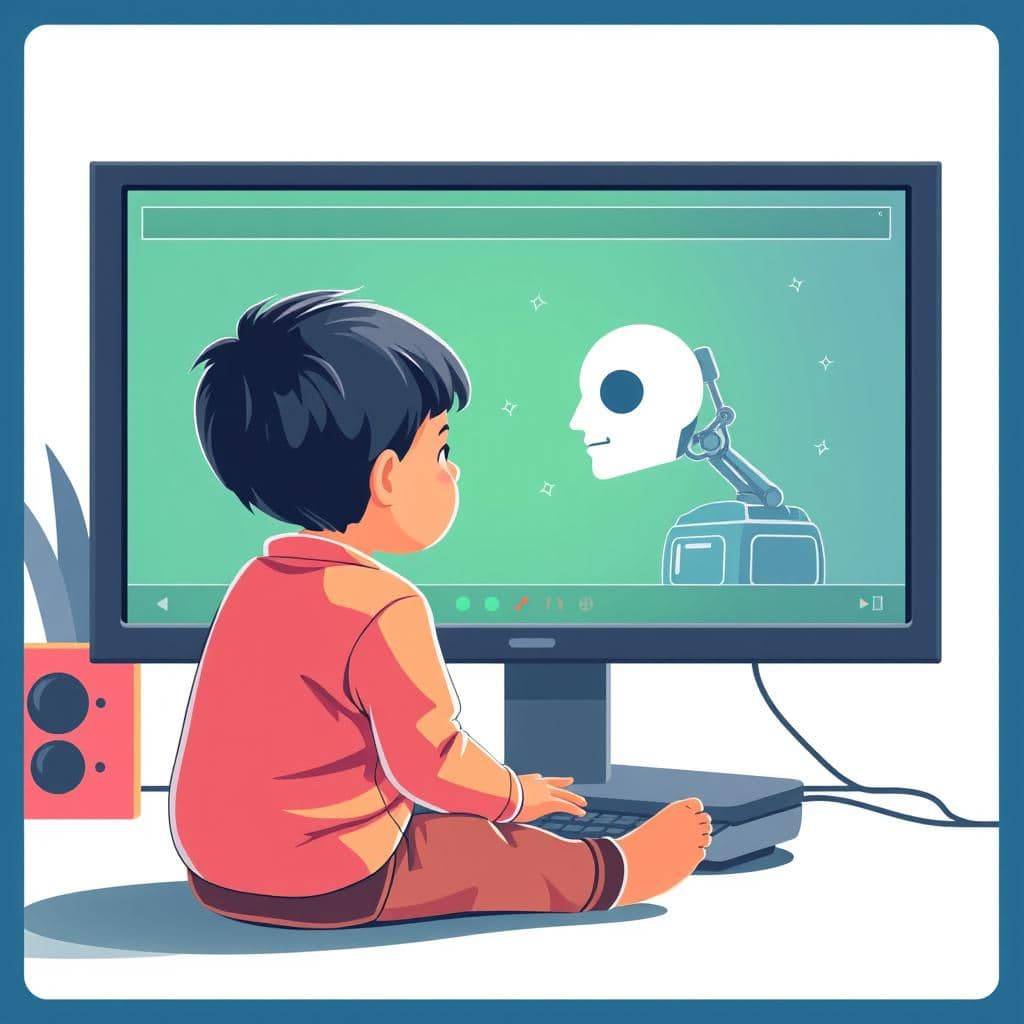
The development of an AI tutor for young children has been a significant undertaking for the team at Ello. The team spent approximately a year building an AI tutor that teaches kids ages 4-9 reading, math, ESL, and more, highlighting the complexities of creating an effective learning experience for young children using AI. This endeavor required a multidisciplinary approach, combining expertise in artificial intelligence, child development, and education to create a comprehensive and engaging learning platform. The AI tutor's ability to adapt to individual learning styles, pace, and abilities is crucial in providing a personalized experience that fosters cognitive, social, and emotional growth in young children.
Effective AI Tutoring Requires Technical Expertise
Developing an AI tutor is challenging and requires significant technical expertise. The AI tutor must understand the child's learning style, pace, and abilities, and adjust its teaching methods accordingly. This requires sophisticated algorithms that analyze the child's behavior and adjust the learning experience in real-time. For instance, the AI tutor must be able to recognize when a child is struggling with a particular concept and provide additional support or modify the lesson plan to better suit the child's needs. Moreover, the AI tutor must be able to communicate clearly and provide constructive feedback that encourages children to learn and explore.
According to Artificial Intelligence concepts, AI tutor development requires a deep understanding of machine learning, natural language processing, and human-computer interaction. The AI tutor must be able to process and analyze large amounts of data, including the child's learning history, to provide a tailored learning experience. This involves developing complex models that can identify patterns and relationships in the data, and using this information to inform the AI tutor's teaching strategies. Furthermore, the AI tutor must be able to interact with children in a way that is engaging, intuitive, and easy to understand, which requires a deep understanding of human-computer interaction and user experience design.
Underlying Architecture in AI Tutoring
The underlying architecture of the AI tutor is crucial to its effectiveness. It must support complex algorithms and machine learning models to provide a personalized learning experience, requiring significant expertise in software development, data analysis, and system design. A well-designed architecture must be able to handle large amounts of data, process complex calculations, and provide real-time feedback to children. This requires a deep understanding of the technical requirements and the ability to design and implement a system that meets those requirements. As noted in the development of the AI tutor, getting the underlying architecture right is essential to creating an effective learning experience.
A deep understanding of the technical requirements and the ability to design and implement a system that meets those requirements is essential. This involves considering factors such as scalability, reliability, and security, as well as ensuring that the system is flexible and adaptable to meet the evolving needs of children and educators. The underlying architecture must also be able to integrate with other systems and tools, such as learning management systems and educational resources, to provide a seamless and comprehensive learning experience.
Developing an AI tutor requires significant technical expertise, and getting the underlying architecture right is essential to creating an effective learning experience.
Overcoming AI Tutoring Challenges
Developing an AI tutor for young children is complex and requires overcoming significant technical challenges. The AI tutor must provide a personalized learning experience tailored to the child's individual needs and abilities, using sophisticated algorithms and machine learning models. Significant expertise in child development and education is also required. The AI tutor must provide an engaging, interactive, and fun learning experience that supports the child's cognitive, social, and emotional development. This involves developing a deep understanding of how children learn and develop, as well as the ability to design and implement effective teaching strategies that cater to different learning styles and abilities.
For example, the AI tutor must be able to recognize and respond to a child's emotional state, providing comfort and support when needed, while also encouraging children to persevere and try new things. The AI tutor must also be able to balance the need for structure and routine with the need for flexibility and adaptability, providing a learning experience that is both engaging and effective. Moreover, the AI tutor must be able to provide feedback that is constructive and supportive, helping children to identify areas for improvement and develop a growth mindset.
The Future of AI Tutoring
The development of an AI tutor for young children is an exciting and rapidly evolving field. As technology advances, we can expect significant improvements in AI tutoring effectiveness and efficiency. AI in education has the potential to revolutionize learning and teaching, providing a more personalized experience for children worldwide. For instance, AI-powered adaptive learning systems can help to identify knowledge gaps and provide targeted support, while AI-powered virtual teaching assistants can help to free up teacher time and provide additional support to students.
For more information on AI and education, visit US Department of Education. The future of AI tutoring will be shaped by technological advances, educational policy changes, and the evolving needs of children and families. As AI technology continues to improve, we can expect to see more widespread adoption of AI-powered learning tools and platforms, leading to improved learning outcomes and increased access to high-quality education. Moreover, the development of AI tutors will require ongoing collaboration and partnership between technologists, educators, and policymakers to ensure that AI is used in ways that support the needs and well-being of children and families.
The development of AI tutors for young children will continue to evolve and improve, impacting the lives of children and families worldwide. As AI technology advances, we can expect to see new and innovative applications of AI in education, from AI-powered learning platforms to AI-powered virtual reality experiences. The potential of AI to transform education and improve learning outcomes is vast, and it will be exciting to see how the development of AI tutors for young children contributes to this larger effort to harness the power of technology to improve education and support the well-being of children and families.